
How to choose metal profiles for your project
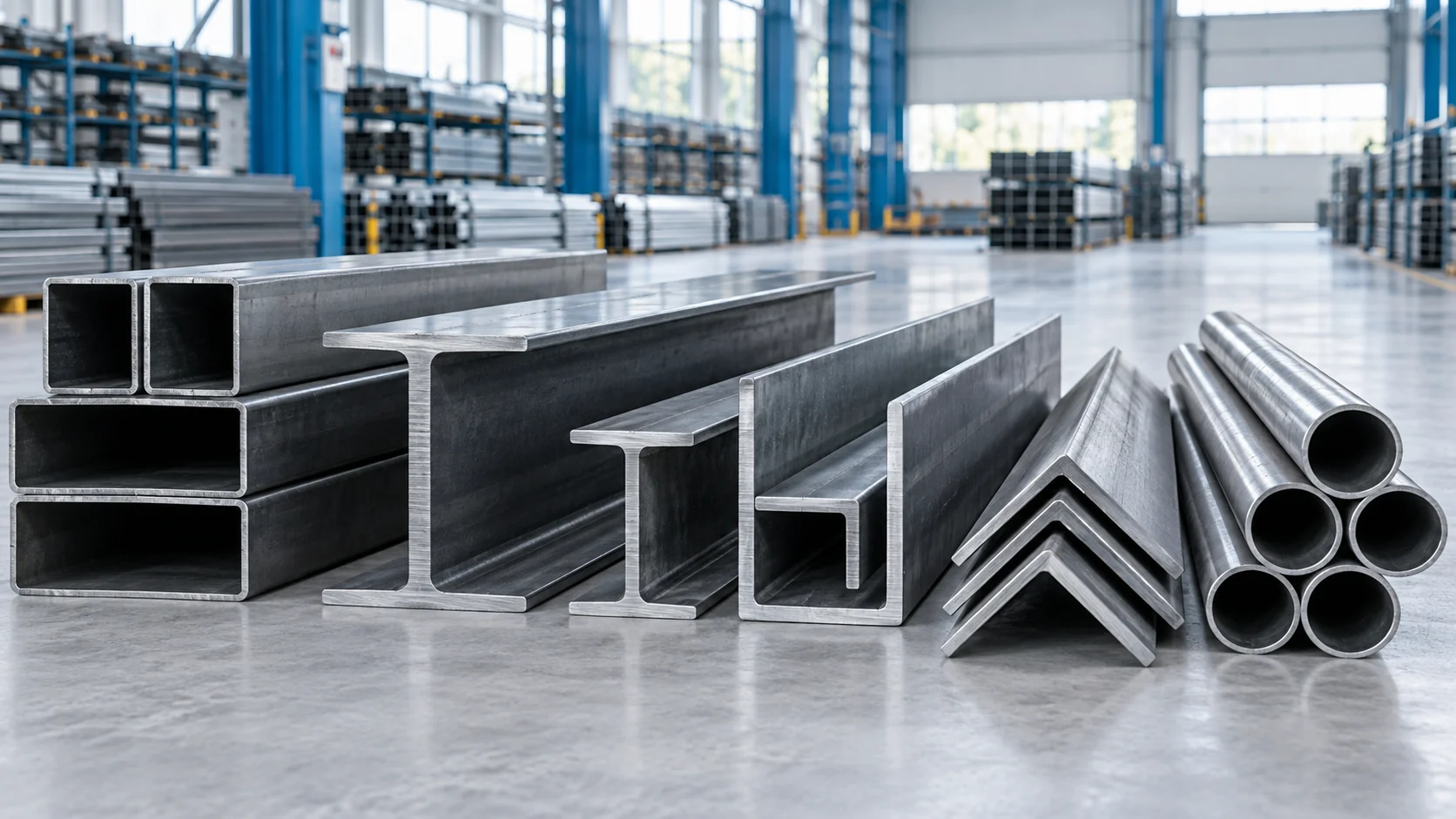
A metal profile should be selected according to the purpose of the structure, the loads, the connection method and the environment. Size alone is not enough. Profiles with the same outside dimensions may have different wall thicknesses, theoretical weights, steel grades and production standards.
Start with the purpose of the structure
Define what the profile must do. Frames, gates and racks are often made from square or rectangular hollow sections. Round tubes can suit rails, supports and parts where a uniform shape is useful in every direction. Beams and columns may require I or H sections, while angles and channels are commonly used for edges, frames and connection details.
A load bearing profile should not be chosen only because it resembles a previous project. The required section and steel grade must be supported by structural calculations.
Choose a shape that suits the connection
Closed sections provide flat outside faces and are convenient for welded frames. Channels and U profiles have an open section that may simplify the attachment of other parts. I and H sections are used where the structural design calls for beams or columns. Equal and unequal angles are different products, so their leg dimensions must be checked separately.
Outside dimensions and wall thickness are not interchangeable
A designation such as 40 x 40 mm describes the outside size of a square section. Wall thickness, for example 2 mm or 3 mm, is stated separately. A thicker wall normally increases theoretical weight per metre, but a designer must confirm whether the section is suitable for the load.
Read the steel grade together with the standard
The grade identifies the material, while the production standard defines requirements for the product. Include both in the enquiry when they are specified in the project. This prevents a section with the right dimensions but the wrong material or intended use from being selected.
Plan surface protection for outdoor use
Uncoated steel can be appropriate when the finished part will be painted or otherwise protected. Galvanized steel already has a zinc coating, but cut edges, welds and damaged areas still require attention. Match the protection system to the environment and maintenance plan.
Include these details in the enquiry
- profile type and section dimensions;
- wall or sheet thickness;
- steel grade and standard, if specified;
- required length, number of pieces and total quantity;
- cutting and delivery requirements.
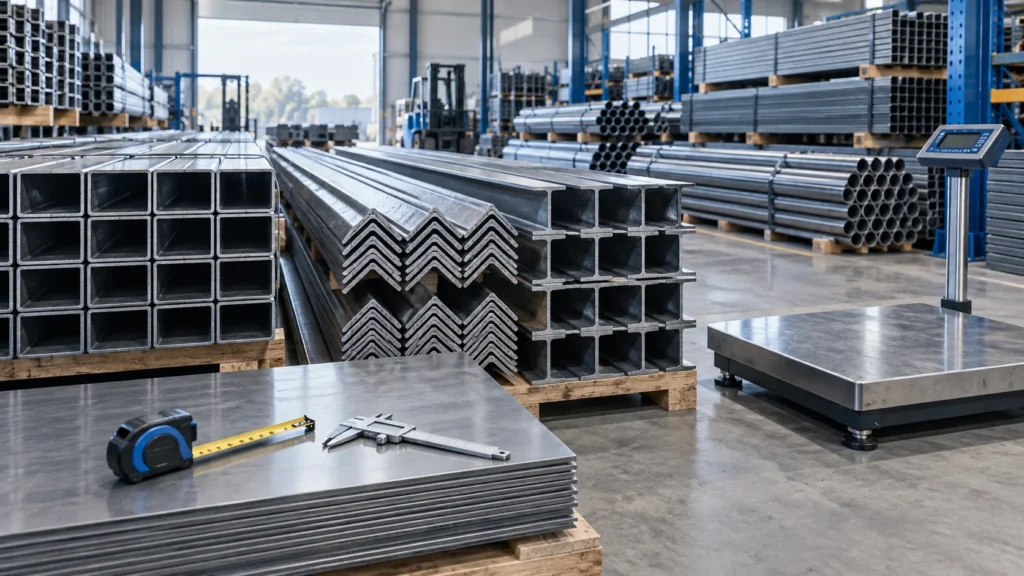
Factory length, order increment and theoretical weight help turn a required quantity into a clear steel enquiry.
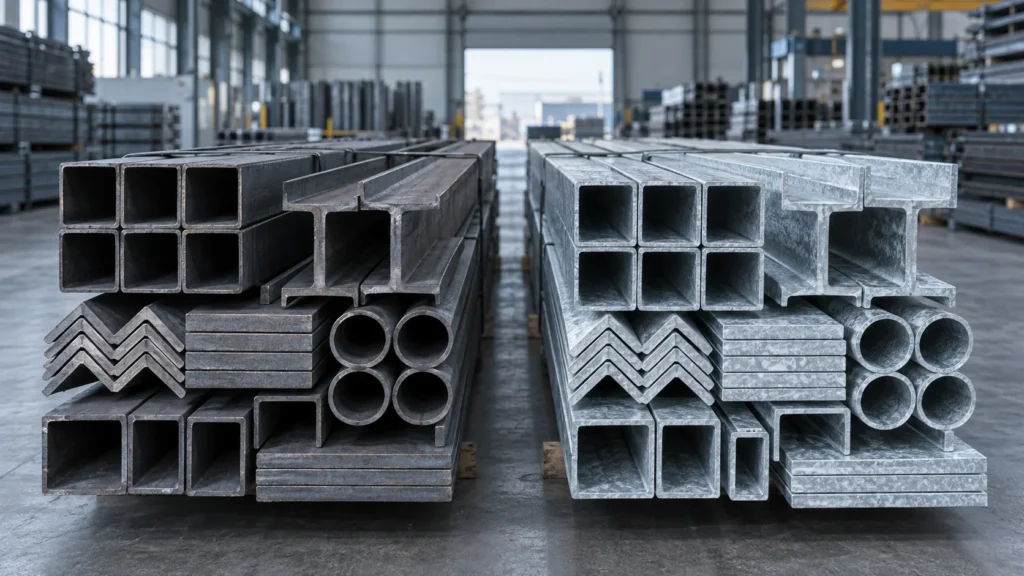
The environment, further fabrication and planned maintenance determine whether galvanized or uncoated steel is the better fit.