
Galvanized or uncoated steel: which should you choose
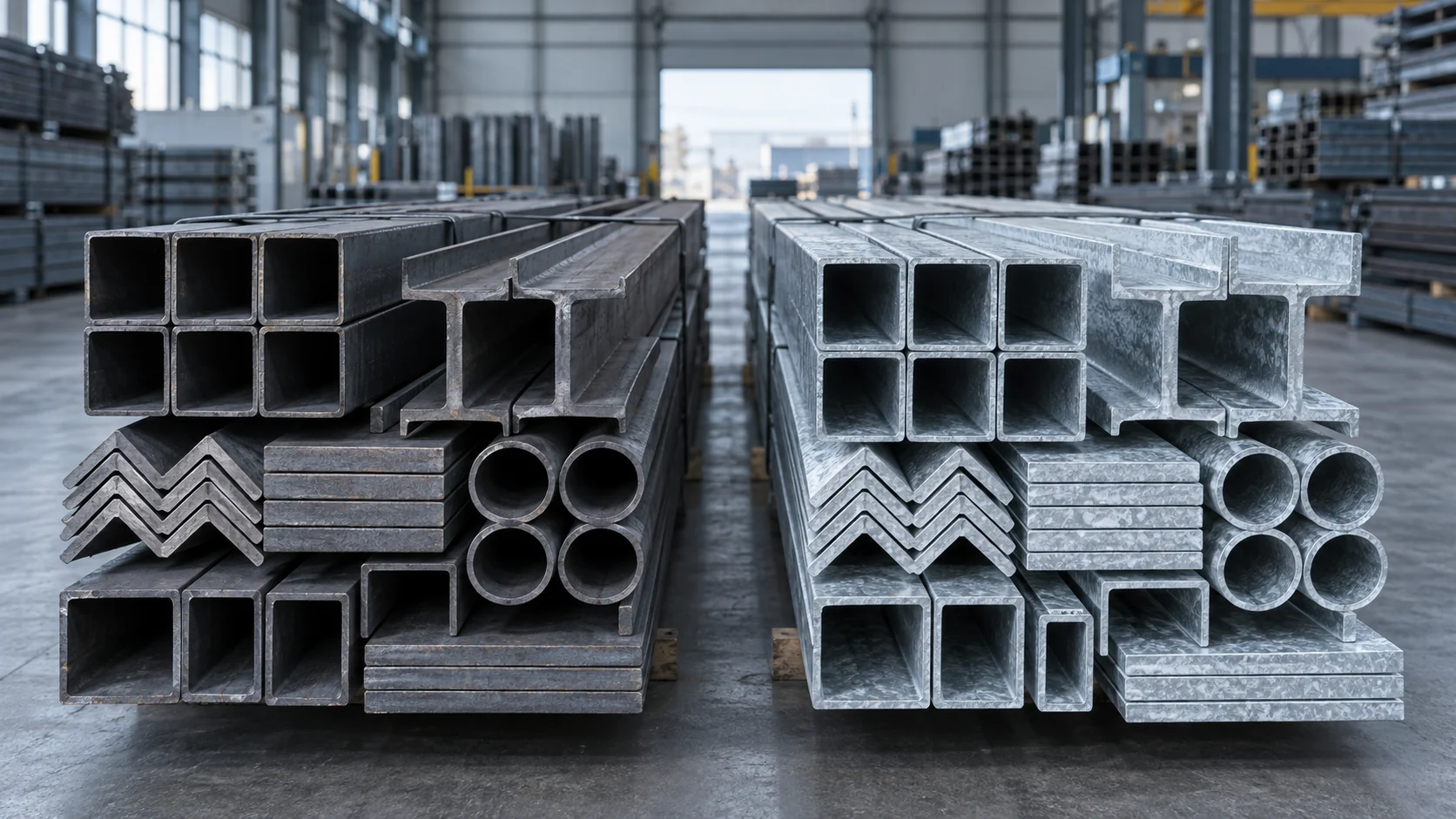
Choose galvanized steel when a zinc coating is part of the required corrosion protection. Uncoated steel is often more suitable when a component will be welded, painted or coated after fabrication. The decision should follow the environment, the project specification and the work still to be carried out.
How the surfaces differ
Uncoated steel has no zinc layer. It can be cut, drilled and welded before a protection system is applied to the completed part. Galvanized steel has a zinc coating over the base material. Its performance depends on the coating type and thickness, the environment and any later fabrication.
Galvanized products are not one interchangeable group. The range includes galvanized square and rectangular hollow sections, round construction tubes, galvanized tubes for water systems, sheets and cold formed profiles. Their standards, steel grades and intended uses differ.
When uncoated steel is practical
- the complete structure will be primed and painted after welding;
- the specification requires another surface protection system;
- the part will be used in a controlled indoor environment;
- substantial cutting, drilling or welding is required before coating.
An uncoated surface does not mean that protection is unnecessary. The exposure conditions and the intended service life define the required system.
When a galvanized product makes sense
Galvanized steel is appropriate when zinc coating is already specified or when separate coating work should be reduced. Galvanized steel sheets, for example, are supplied as positions with defined dimensions, thicknesses and grades. Tubes and profiles must also be checked against their own product standard, not only the word galvanized.
Cutting and welding affect the coating
Cutting exposes an edge, while welding heats and disrupts the zinc layer. Include these areas in the fabrication and protection plan. Qualified specialists should determine the welding procedure and safety measures.
What to include in the enquiry
State the product type, dimensions, wall or sheet thickness, steel grade, standard, quantity and cutting requirements. Add information about outdoor or more aggressive exposure so that the relevant product can be checked.
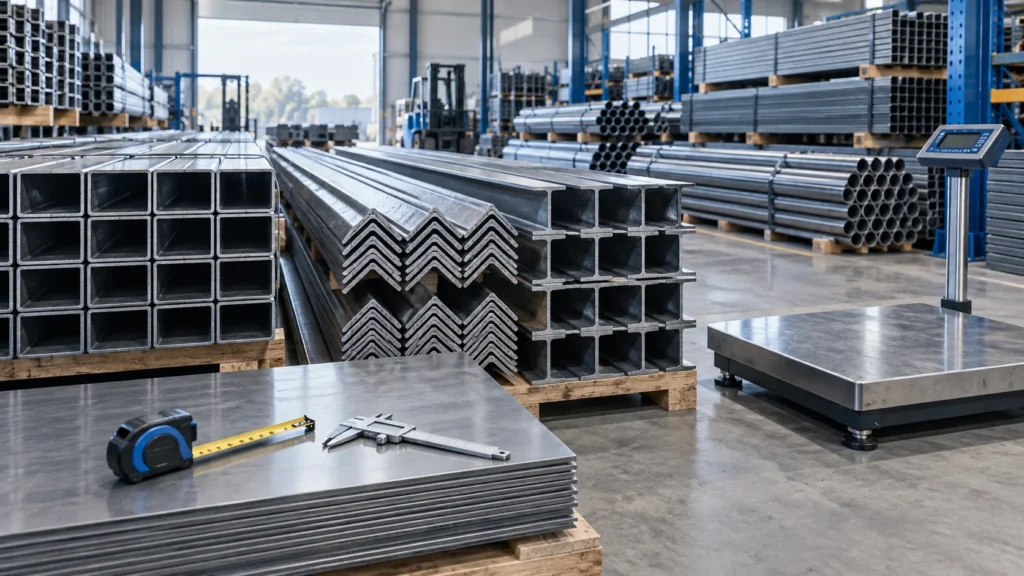
Factory length, order increment and theoretical weight help turn a required quantity into a clear steel enquiry.
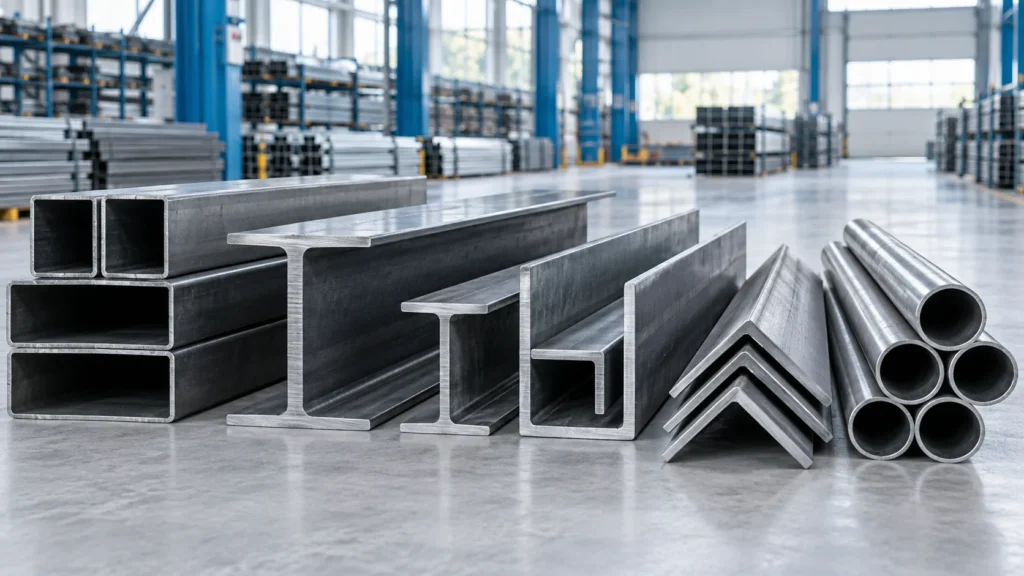
Profile shape, dimensions, wall thickness, steel grade and environment determine whether a product is suitable for the intended…